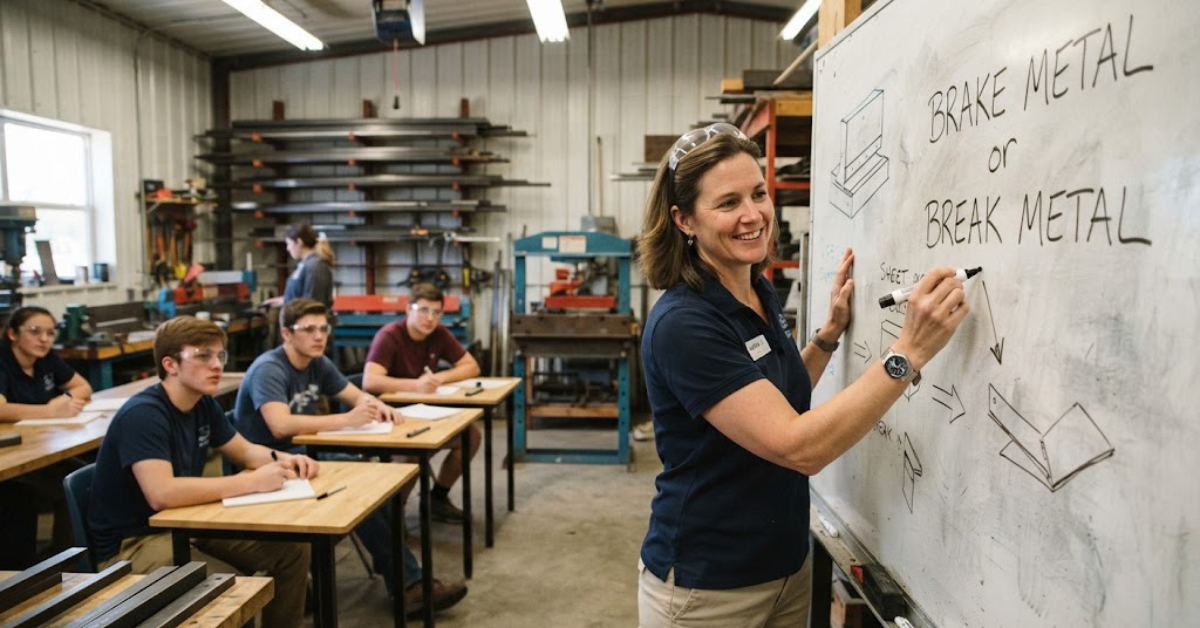
If you have ever come across the phrase “brake metal or break metal,” you are not alone in wondering which spelling is correct. The two words sound almost identical, but they can point to very different meanings.
In construction and sheet-metal work, brake metal is the established technical term for sheet metal shaped using a brake or press brake. In ordinary English, however, break metal can simply mean metal that is broken, fractured, or separated.
So, is it brake metal or break metal? The answer depends on what you are trying to say. This guide explains the difference, the meaning of each phrase, and how to use them naturally and correctly.
Brake Metal or Break Metal: The Quick Answer
Here is the easiest way to remember the difference:
- Brake metal → sheet metal formed or bent using a metalworking brake.
- Break metal → metal that someone or something breaks, fractures, or separates.
- Brake is associated with a machine or tool used for forming metal.
- Break describes an action in which something is damaged, fractured, or separated.
In architectural and construction contexts, brake metal is usually the term you want when discussing custom-bent sheet metal. A sheet-metal brake clamps and bends material into a desired shape.
What Is Brake Metal?
Brake metal is sheet metal that has been formed or bent using a brake, particularly a press brake or sheet-metal brake.
A brake is a machine designed to bend sheet metal along straight lines. Depending on the equipment and tooling, it can produce angles, channels, hems, folds, and other profiles.
Brake metal is commonly used in construction and architectural applications where flat sheets need to be turned into precisely shaped components.
Typical examples include:
- Flashing
- Roof and wall trim
- Copings
- Fascia
- Drip edges
- Brackets
- Custom enclosures
- HVAC components
- Decorative architectural details
Architectural specifications commonly use the term brake metal for sheet-metal trim and flashing formed with a brake.
How Is Brake Metal Made?
The process is fairly straightforward, although producing accurate parts requires careful measurement and tooling.
- A sheet of metal is cut to the required dimensions.
- The sheet is positioned in a brake.
- The machine clamps the material in place.
- A punch, die, or hinged mechanism applies force at the desired location.
- The sheet is bent to the specified angle.
- Additional bends can be made to create the finished profile.
Modern press brakes can produce highly consistent bends and complex shapes, making them useful for both architectural and industrial fabrication.
What Is Break Metal?
Break metal is not normally the technical term for sheet metal that has been bent in a brake.
Instead, when break is used as a verb, it means to fracture, damage, split, or separate something. Therefore, a sentence such as:
“The machine can break metal.”
means that the machine is capable of breaking or fracturing metal.
For example:
- “The excessive force could break the metal.”
- “The impact broke the metal bracket.”
- “The old metal began to break under pressure.”
In these sentences, break is an ordinary English verb. It has nothing to do with a sheet-metal brake.
This distinction matters because break metal and brake metal are homophones: they sound alike but have different spellings and meanings.
Brake Metal vs Break Metal
The difference becomes much easier when you compare the words directly.
| Term | Meaning | Typical Use |
| Brake metal | Metal formed using a brake | Construction, fabrication, architecture |
| Break metal | Metal that is broken or fractured | General English, mechanical descriptions |
| Brake | A tool or machine for bending/forming | Sheet-metal work |
| Break | To fracture, damage, or separate | General action |
For example:
Correct technical usage:
The contractor ordered custom brake metal for the roof flashing.
Correct ordinary usage:
Excessive pressure could break the metal.
The spelling changes because the meaning changes.
Why Do People Confuse Brake and Break?
The confusion is understandable because brake and break are pronounced the same way in standard English.
They are called homophones, meaning words that sound alike but have different spellings and meanings.
A simple memory trick can help:
Brake = bend.
Think of a sheet-metal brake bending a piece of metal.
Break = fracture.
Think of something breaking into pieces.
That distinction is especially useful when writing construction specifications, fabrication instructions, or technical articles.
What Is a Metal Brake?
A metal brake, also called a sheet-metal brake, is a tool or machine used to bend sheet metal.
A basic brake holds the sheet securely and bends it around a straight edge. More advanced equipment, such as a press brake, uses a punch and die to form precise bends.
Different types of brakes are suited to different jobs.
Sheet-Metal Brake
A basic sheet-metal brake is commonly used for relatively light sheet-metal work. It can create straightforward bends for flashing, trim, and similar components.
Box-and-Pan Brake
A box-and-pan brake, sometimes called a finger brake, has adjustable sections that make it possible to form boxes, pans, and more restricted shapes.
Press Brake
A press brake is a more sophisticated machine that uses a punch and die to form predetermined bends. Modern press brakes can be manually operated or computer controlled for greater consistency.
What Materials Can Be Used for Brake Metal?
Brake-forming equipment can work with a variety of sheet-metal materials, depending on the machine, tooling, thickness, and required bend.
Common materials include:
- Aluminum
- Steel
- Stainless steel
- Copper
- Brass
- Other ductile sheet metals
The appropriate material and tooling depend on the project. Factors such as material thickness, strength, bend radius, tooling width, and machine capacity all affect the final result.
For example, architectural brake-metal fabrication may involve aluminum sheets that are cut and bent into custom trim, coping, or flashing.
Brake Metal in Construction
The term brake metal appears frequently in construction because many building components begin as flat sheets but need to be shaped before installation.
A contractor might need a piece of metal that fits around a corner, protects an edge, directs water away from a wall, or creates a finished architectural detail.
Brake-forming makes it possible to manufacture those components to specific dimensions.
Common construction applications include:
Flashing
Brake-formed metal can be used to direct water away from vulnerable areas around roofs, walls, windows, and other building components.
Coping
Custom-bent metal can be formed over the top of walls or parapets to provide protection and create a finished appearance.
Fascia and Trim
Brake metal can be fabricated into custom profiles that cover edges and transitions while contributing to the appearance of a building.
Drip Edges
Precisely formed metal can help control water movement and prevent moisture from reaching areas where it could cause damage.
Brake Metal or Break Metal: Which One Should You Use?
The right choice depends on the sentence.
Use brake metal when you are talking about:
- Sheet metal formed with a brake
- Architectural metal trim
- Custom flashing
- Press-brake fabrication
- Bent sheet-metal components
- Construction specifications
Use break metal when break is functioning as a verb meaning to fracture, damage, or separate metal.
Examples
Brake metal:
The architect specified brake metal around the roof perimeter.
Brake metal:
The fabricator produced custom brake metal for the window trim.
Break metal:
Too much force can break the metal.
Break metal:
The repeated stress eventually caused the bracket to break.
Notice that the words are not interchangeable. The correct spelling follows the meaning.
Is “Brake Metal” Always the Correct Phrase?
Not necessarily.
If you are describing a metal component that is simply associated with a vehicle’s braking system, brake metal could be understandable in context, but it is not the standard general term for all metal brake components.
In sheet-metal fabrication and architectural construction, brake metal has a specific meaning: metal formed with a brake.
That technical meaning is why the phrase can look strange to someone unfamiliar with the trade. The word brake here refers to the forming machine, not to a vehicle’s braking mechanism.
Common Mistakes With Brake Metal and Break Metal
Here are some mistakes worth avoiding:
Mistake 1: Using “break metal” for bent sheet metal
Incorrect:
The contractor installed break metal flashing.
Better:
The contractor installed brake metal flashing.
Mistake 2: Using “brake” when you mean fracture
Incorrect:
The pressure may brake the metal.
Correct:
The pressure may break the metal.
Mistake 3: Assuming “brake” always refers to vehicles
The word brake has several uses. In metalworking, a brake is a machine for bending or forming material.
Mistake 4: Treating the terms as interchangeable
Although they sound identical, brake and break perform different grammatical and semantic jobs.
How to Remember the Difference
If you regularly confuse brake metal or break metal, use this simple rule:
A brake bends metal; a break damages or separates metal.
That one sentence covers most situations.
You can also remember the related phrase press brake. A press brake is specifically used to bend and form sheet metal, so the resulting material may be described as brake metal in construction and fabrication contexts.
Frequently Asked Questions
Is it brake metal or break metal?
In sheet-metal fabrication and construction, the standard technical term is brake metal when referring to sheet metal formed using a brake. Break metal can be grammatically correct when “break” means to fracture or damage metal.
What is brake metal?
Brake metal is sheet metal that has been bent or formed using a sheet-metal brake or press brake. It is often used for flashing, trim, coping, fascia, and other custom architectural components.
What is break metal?
“Break metal” is generally not the standard technical name for brake-formed sheet metal. In ordinary English, it can mean metal that is being broken, fractured, or separated.
What is a metal brake?
A metal brake is a tool or machine used to bend sheet metal. Depending on its design, it may create simple folds or more complex profiles.
Is brake metal used in construction?
Yes. Brake metal is widely used for architectural and construction components such as flashing, coping, fascia, trim, and custom formed pieces.
Is “break metal” a spelling mistake?
Not always. If you mean metal that is being broken, “break metal” can be grammatically valid. However, if you mean sheet metal formed using a brake, the appropriate term is brake metal.
What is the difference between brake and break?
Brake can refer to a device that slows something down or, in metalworking, a machine used to bend sheet metal. Break means to damage, fracture, split, or separate something.
Conclusion: Brake Metal or Break Metal?
When choosing between brake metal or break metal, focus on the meaning rather than the pronunciation.
If you are discussing sheet metal bent or formed with a brake, use brake metal. It is a recognized term in sheet-metal fabrication and construction, particularly for custom trim, flashing, coping, and other formed components.
If you mean that someone or something fractures or damages metal, use break metal when the grammar calls for the verb break.
The easiest rule to remember is simple: brake metal is formed; metal can break. Once you connect brake with the sheet-metal machine and break with fracture or damage, the spelling becomes much easier to get right.