Have you ever seen a measurement like 5 inches and wondered what it actually looks like? A number on its own doesn’t always give you a useful sense of scale, especially if you’re more comfortable thinking in centimeters.
So, how big is 5 inches? The exact answer is 12.7 centimeters, but the better way to understand the measurement is to compare it with familiar objects. A 5-inch length is small enough to fit comfortably in your hand but large enough to be a noticeable dimension for many everyday items.
In this guide, we’ll look at how long is 5 inches, convert it into other units, compare it with common objects, and explain how to measure 5 inches accurately.
How Big Is 5 Inches Exactly?
Let’s start with the basic conversion.
5 inches = 12.7 centimeters.
Because one inch is defined as exactly 2.54 centimeters:
5 × 2.54 = 12.7 cm
Here are some useful conversions:
| Measurement | Equivalent to 5 Inches |
| Inches | 5 in |
| Centimeters | 12.7 cm |
| Millimeters | 127 mm |
| Feet | 0.4167 ft |
| Yards | 0.1389 yd |
| Meters | 0.127 m |
For everyday conversations, you can simply remember that 5 inches is about 12.7 cm.
How Long Is 5 Inches?
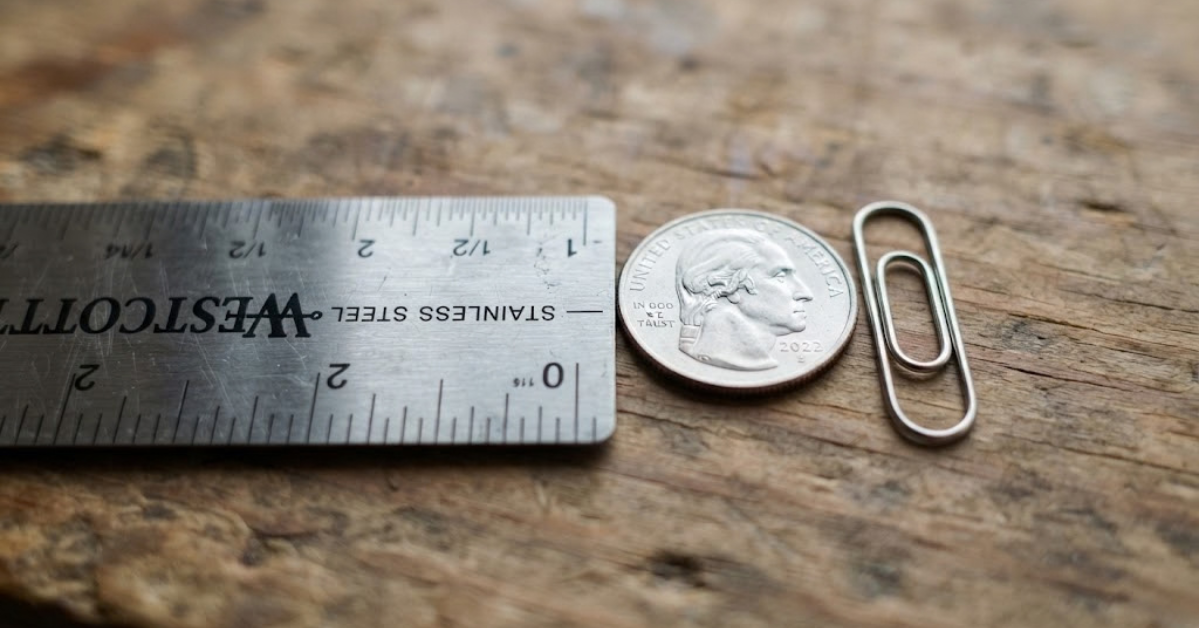
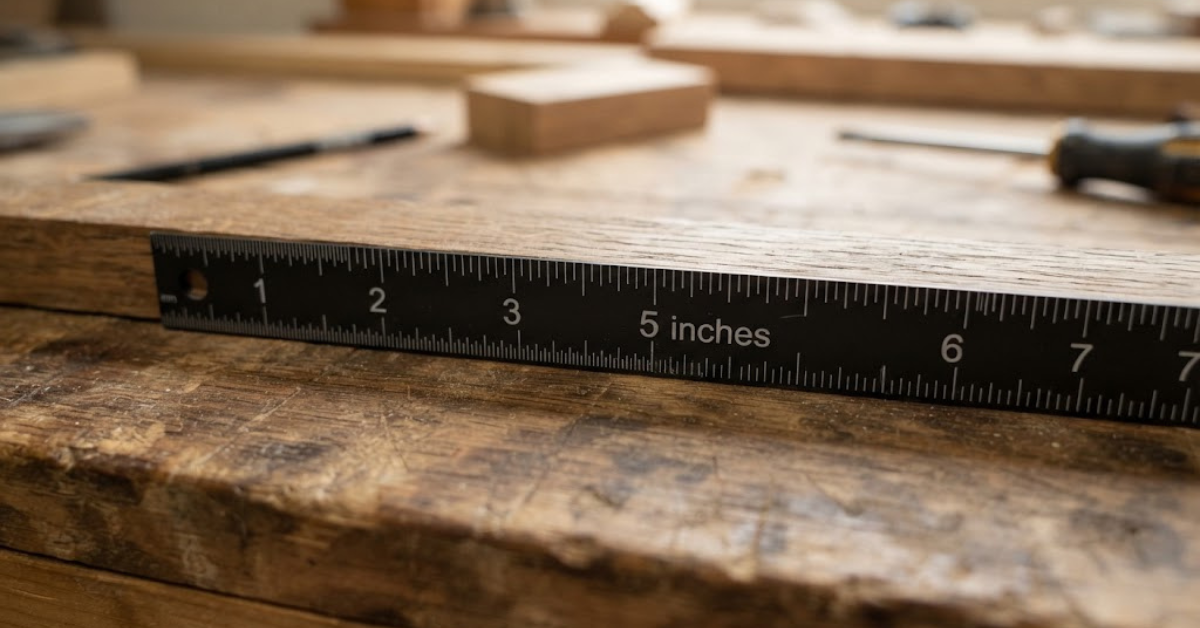
If you’re wondering how long is 5 inches, picture a standard ruler.
On a typical 12-inch ruler, 5 inches reaches from the zero mark to the 5-inch mark. That means it is a little less than half the length of the entire ruler.
More precisely, 5 inches represents:
5 ÷ 12 = 41.67% of one foot
So 5 inches is just over two-fifths of a foot.
It isn’t an especially large measurement, but it’s long enough to represent the height, width, or length of many small objects.
What Does 5 Inches Look Like?
The easiest way to visualize 5 inches is to compare it with objects you probably recognize.
Depending on the exact dimensions, 5 inches is roughly comparable to:
- The length of a small smartphone’s shorter dimension
- About the length of a standard-sized pencil’s eraser-to-middle section
- The width of a small paperback book
- A little more than the length of a U.S. dollar bill from end to end
- The height of some compact household objects
- About 12.7 centimeters on a metric ruler
These are visual references rather than exact substitutes. Objects vary from one manufacturer to another, so use an actual ruler whenever precision matters.
5 Inches Compared With a U.S. Dollar Bill
A U.S. dollar bill is 6.14 inches long.
That makes it a useful reference for understanding 5 inches.
If you put a 5-inch measurement next to a dollar bill, the bill would extend about:
1.14 inches farther.
So 5 inches is noticeably shorter than a dollar bill, but not dramatically so.
This makes a dollar bill a convenient object for getting a rough sense of the measurement.
5 Inches Compared With a Standard Ruler
A standard ruler is usually 12 inches long.
If you mark the 5-inch point, you’re less than halfway along the ruler.
Here’s a simple breakdown:
| Ruler Measurement | Portion of a 12-Inch Ruler |
| 3 inches | 25% |
| 4 inches | 33.3% |
| 5 inches | 41.7% |
| 6 inches | 50% |
| 8 inches | 66.7% |
| 10 inches | 83.3% |
| 12 inches | 100% |
This is one of the easiest ways to picture how big is 5 inches.
5 Inches Compared With Your Hand
Your hand can be a convenient measuring reference, but there’s an important catch: hand sizes differ from person to person.
For many adults, 5 inches may correspond roughly to part of the hand or the distance across certain sections of the palm. But it shouldn’t be assumed that everyone’s hand has the same dimensions.
If you want to use your hand as a personal measuring tool, calibrate it first.
How to Calibrate Your Hand
- Place your hand beside a ruler.
- Identify a convenient distance between two points.
- Measure that distance.
- See how close it is to 5 inches.
- Remember the relationship for future estimates.
Once you’ve calibrated your hand, it can become useful for quick, rough measurements when you don’t have a ruler nearby.
Is 5 Inches Big or Small?
There’s no universal answer because 5 inches is a measurement, not a size category.
For example, 5 inches would be quite large for:
- A button
- A coin
- A pencil eraser
- A small electronic component
But it would be relatively small for:
- A television
- A dining table
- A shelf
- A sheet of paper
The object being measured makes all the difference.
A 5-inch measurement can represent a substantial width on one object and a relatively small dimension on another.
Everyday Objects Around 5 Inches
Several everyday objects can help you develop a mental picture of the measurement.
1. A Small Smartphone
Some smaller smartphones have a physical height or width in the neighborhood of 5 inches, although most modern phones are longer than this.
It’s important not to confuse screen size with the physical dimensions of a phone.
When a phone is advertised as having a 5-inch display, that measurement normally refers to the diagonal screen measurement, not the phone’s height or width.
2. A Dollar Bill
As mentioned above, a U.S. dollar bill is 6.14 inches long.
A 5-inch object would therefore be about 1.14 inches shorter than the bill.
That makes currency one of the easier everyday references for estimating the measurement.
3. A Small Book
Many small books have one dimension close to 5 inches, although book sizes vary widely.
A pocket-sized book can give you a reasonable visual reference, but don’t assume its dimensions are exactly 5 inches without measuring it.
4. Kitchen and Household Items
Small kitchen tools, compact containers, and other household objects can have dimensions close to 5 inches.
For example, a utensil might be 5 inches wide or a container might be 5 inches tall.
The key is to identify which dimension is being measured.
5 Inches in Centimeters and Millimeters
If you’re working with metric measurements, the conversion is particularly simple.
5 inches = 12.7 centimeters = 127 millimeters.
This means that on a metric ruler, you would measure exactly 12.7 cm.
For a quick estimate, you can think of 5 inches as approximately 13 centimeters, but use 12.7 cm when accuracy matters.
How to Measure 5 Inches With a Ruler
Need to measure something that should be exactly 5 inches long?
It’s straightforward.
Step 1: Find the Zero Mark
Place the zero mark of your ruler at one end of the object.
Don’t automatically use the physical edge of the ruler because some rulers have a small margin before the zero marking.
Step 2: Extend to the 5-Inch Mark
Look along the ruler until you reach the large 5-inch marking.
If the end of the object reaches that mark, it measures 5 inches.
Step 3: Check the Smaller Marks
If the object doesn’t end exactly at 5 inches, look at the smaller divisions.
Depending on the ruler, you may see measurements divided into:
- 1/2 inch
- 1/4 inch
- 1/8 inch
- 1/16 inch
These markings let you determine whether the object is slightly shorter or longer than 5 inches.
How to Measure 5 Inches Without a Ruler
Sometimes you need a rough estimate when a measuring tool isn’t available.
You can use familiar objects, but remember that this method isn’t precise.
One option is to use a U.S. dollar bill as a reference. Since it is 6.14 inches long, 5 inches is approximately 1.14 inches shorter.
Another approach is to visualize a 12-inch ruler and estimate a little less than half its length.
For accurate construction, crafting, furniture fitting, or other projects where small differences matter, use a proper measuring tool.
5 Inches Compared With Other Common Measurements
Seeing several measurements together can make 5 inches much easier to understand.
| Length | Centimeters | How It Compares With 5 Inches |
| 2 inches | 5.08 cm | 3 inches shorter |
| 3 inches | 7.62 cm | 2 inches shorter |
| 4 inches | 10.16 cm | 1 inch shorter |
| 5 inches | 12.7 cm | Reference measurement |
| 6 inches | 15.24 cm | 1 inch longer |
| 8 inches | 20.32 cm | 3 inches longer |
| 10 inches | 25.4 cm | 5 inches longer |
| 12 inches | 30.48 cm | 7 inches longer |
This gives you a useful mental scale.
For example, 6 inches is only one inch longer than 5 inches, while 10 inches is twice as long.
5 Inches vs. 5-Inch Screen Size
The phrase 5 inch can be confusing when you’re shopping for electronics.
A “5-inch screen” does not necessarily mean the device is 5 inches long.
Screen sizes are typically measured diagonally.
Imagine drawing a line from one corner of a rectangular screen to the opposite corner. That diagonal could measure 5 inches even though the screen’s height and width are both smaller.
So:
5-inch screen ≠ 5-inch device length
This distinction is especially important when comparing smartphones, monitors, tablets, and other displays.
Why Visual Comparisons Aren’t Always Exact
Online articles often use objects such as pencils, phones, coins, and cards to explain measurements.
They’re useful, but there’s a limitation.
Manufacturers don’t make every everyday object to exactly the same dimensions. A pencil from one company might be a different length from another, while smartphones vary substantially between models.
That’s why a good 5 inches comparison should be treated as a way to understand scale—not as a replacement for measuring the object itself.
Practical Uses for a 5-Inch Measurement
Understanding the size can be helpful for many everyday tasks.
You might encounter a 5-inch dimension when:
- Measuring a small package
- Choosing a picture frame
- Checking furniture spacing
- Buying a compact electronic device
- Measuring craft materials
- Planning a DIY project
- Comparing product dimensions
- Checking whether something will fit into a particular space
When ordering something online, pay attention to whether the listed measurement refers to length, width, height, depth, or diagonal.
A product described as “5 inches” doesn’t tell you enough by itself.
Frequently Asked Questions About 5 Inches
How big is 5 inches?
5 inches is 12.7 centimeters long. On a standard 12-inch ruler, it reaches a little less than halfway across the ruler.
How long is 5 inches?
5 inches is exactly 12.7 cm, or 127 mm. It is also 5/12 of a foot, which is approximately 0.417 feet.
Is 5 inches long or short?
It depends on what you’re measuring. Five inches is relatively substantial for a small object but quite short for something like furniture or a large appliance.
What does 5 inches look like?
A 5-inch length is slightly shorter than a U.S. dollar bill, which measures 6.14 inches long. It’s also a little less than half the length of a standard 12-inch ruler.
How many centimeters is 5 inches?
5 inches equals exactly 12.7 centimeters.
How many millimeters are in 5 inches?
5 inches equals 127 millimeters.
Is 5 inches the same as 13 cm?
Not exactly. Five inches is 12.7 cm, which is 0.3 cm shorter than 13 cm. For rough estimates, you can round it to approximately 13 cm.
How much of a foot is 5 inches?
There are 12 inches in a foot, so 5 inches is 5/12 of a foot, or approximately 41.7% of a foot.
Is a 5-inch screen 5 inches wide?
No. A screen’s advertised size is generally its diagonal measurement, from one corner to the opposite corner. Its actual width and height will be smaller.
Can I estimate 5 inches using my hand?
You can make a rough estimate, but hand sizes vary. For a reliable measurement, calibrate your hand against a ruler first or use a measuring tape.
Final Takeaway: How Big Is 5 Inches?
So, how big is 5 inches? The exact measurement is 12.7 centimeters, or 127 millimeters.
For a quick visual reference, think of a standard 12-inch ruler: 5 inches reaches a little less than halfway along it. A U.S. dollar bill is another useful comparison because its 6.14-inch length is just over an inch longer than 5 inches.
Remember that everyday comparisons are only estimates. If you’re measuring for a DIY project, buying something that needs to fit a specific space, or checking product dimensions, use a ruler or measuring tape.
Once you can picture 5 inches as roughly 12.7 centimeters, it becomes much easier to understand and compare measurements in everyday life.